Sign in. It’s quick, free and it’s up to you.
An account is an optional way to support the work we do. Find out more.
Sign in. It’s quick, free and it’s up to you.
An account is an optional way to support the work we do. Find out more.
 InvestigatesSeal harm
VISITORS TO A popular Co Kerry island are disturbing Ireland’s largest grey seal colony by flying drones and picking up pups for selfies.
The Journal Investigates can reveal the “almost daily” incidents on the Great Blasket Island have led to mothers abandoning their young.
Fed-up “concerned members of the public” who were living there for a number of weeks on the remote island begged Ministers to act, warning pups will “perish” unless more measures are put in place to protect the colony.
Alongside a number of recommendations, they called on the beach where the seals live to be closed during critical pupping time.
“As things stand, if no action is taken, it is an absolute certainty that seal pups will perish as a direct result of tourist disturbance,” one letter, sent to the Heritage Minister, and obtained by The Journal Investigates, states.
Experts have also echoed calls for stricter security measures around the protected species, warning human disturbance is one of the biggest factors threatening seals on the island.
María Pérez Tadeo, a marine mammal biologist, told The Journal Investigates: “The consequences are so serious.
“If 1,000 seals have to leave a place that they’ve been using for so many years, where do they go?”
In a statement, the National Parks and Wildlife Service (NPWS), in charge of protecting the species under the Wildlife Act 1976, said the seal population is “extremely well conserved” and “not in any danger”.
“Visitors and the public generally should be assured that the Office of Public Works (OPW) and the NPWS are fully committed to the safeguarding and conservation of the biodiversity of the Great Blasket Island,” a spokesperson said.
The NPWS added that, “based on the evidence”, current levels of visitor movements around the island are “not causing a significant negative impact on the seal population”.
Investigations like this don’t happen without your support… Impactful investigative reporting is powered by people like you.
Yesterday, we revealed how the number of dead seals washing up on Irish shores had doubled within three years.
According to figures compiled by Seal Rescue Ireland, 430 seals deaths were reported in 2023, more than the 201 deaths reported in 2020.
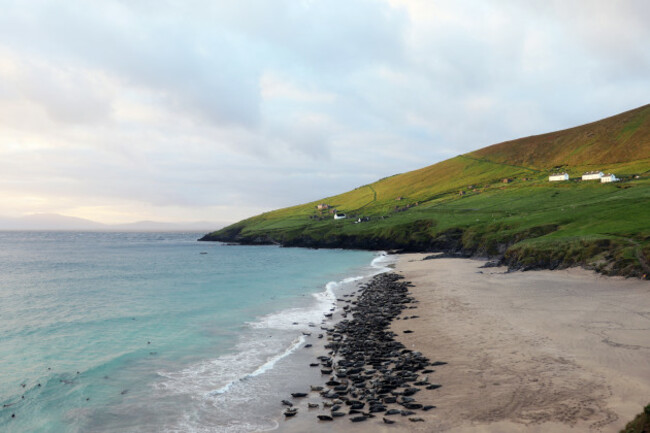
The Blaskets, a year round tourist hotspot, is home to the country’s largest grey seal colony.
In 2022, a pup was killed on the island after tourists picked it up for a “selfie”, before throwing it into the sea.
The animal was too young to swim and sadly died after being “hurled” into the water, according to documents obtained by The Journal Investigates under Access to Information on the Environment (AIE).
Despite the “distressing” incident being widely publicised at the time, people living on an extended stay on the small island complained that tourists continued to approach seals.
“On a personal level, it is heart-breaking to watch these disturbances take place daily,” they wrote to the Heritage Minister in 2023.
On a national level, it is an embarrassment that we cannot preserve this ‘Protected Species’ in this Special Area of Conservation (SAC).
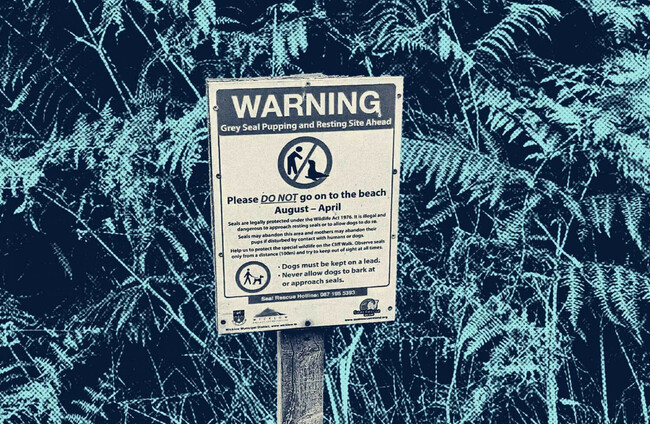
Although warning signs had been erected since the pup’s death, they said that this made little to no difference, fearing more seals would be harmed.
“It would be incredibly regrettable for this to happen to one of Ireland’s national treasures and after the relevant authorities have been notified,” they wrote.
In a statement to The Journal Investigates, a NPWS spokesperson said that the “vast bulk” of times when seals inhabit the Blasket beach occurs “during the times the island is not accessed by visitors”.
This, the NPWS said, happens between October and March in multiple locations, “most of which are not affected by any human disturbance at any time”.
The Great Blasket Island is home to around 2,000 grey seals, with the population recovering significantly since the early 1900s when the species faced extinction. In Ireland and across the EU, they are protected under special status.
The current native population – which includes grey and harbour seals – is estimated to be between 7,000 and 10,000, according to the NPWS.
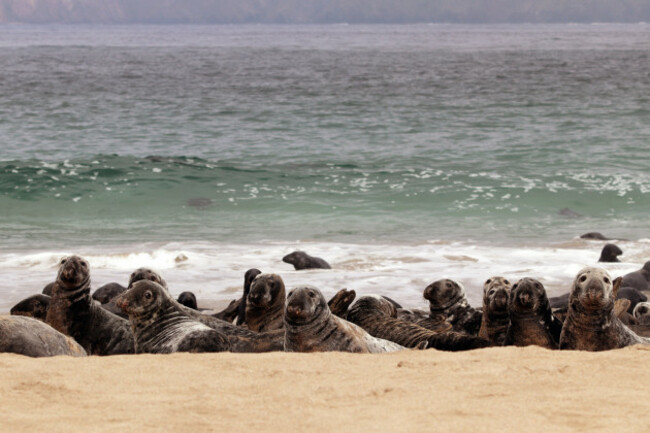
María Pérez Tadeo, a post-doctoral researcher with the Atlantic Technological University (ATU), spent years studying the Blasket colony.
She witnessed first hand the impact of human disturbance on the species, which included the use of drones to film or photograph the sea mammals.
“It’s very nice to see on Instagram these beautiful videos of the seals laying on the beach. But what we witnessed on the island was people flying drones very, very close to the seals,” she said.
“Some people were very respectful, like looking at the seals from the top of the cliff. Other tourists were just running up to the seals, causing them to leave the beach.”
The researcher also found tour boats approaching the island had a negative impact on the seals, causing some to leave the beach.
“Grey seals spend part of the year in the water, hidden, and they travel big distances,” she said.
“They move between Ireland and Scotland as well. But they need time on the beach or on the shore to rest, to breed and to mate. So while they are there, they are resting.
There is a chance that the pups could be abandoned by their mothers who are disturbed and then enter the sea, and that means they don’t get fed.
Her research, carried out alongside ATU colleagues, also revealed further threats.
“I came across many seals who suffered serious injuries from being entangled in fishing nets. When they have nets around the neck, they really suffer bad injuries.”
She questions whether even the best signage can prevent the harm caused by human ignorance or carelessness.
“I sometimes wonder if a sign will keep people away? These are protected species, these are special areas of conservation. Yet these things are still happening?”
Pérez Tadeo advocates for stronger regulations, education for tour operators and rigorous environmental impact assessments involving seal habitats.
In a statement, the NPWS said there is “no evidence” that the seal population has been adversely affected by visitor movements.
“Furthermore, the OPW maintains a regular presence of visitor experience personnel and general operatives on the island,” a spokesperson said.
“New signs were installed for the 2023 season to remind visitors of the special biodiversity on the island and in particular of the seal colony.
“All visitors to the island are given printed information which includes advices around not disturbing the seals.”
In 2021, then Junior Heritage Minister Malcolm Noonan urged the public to “cop on” after getting too close to another marine visitor.
Wally the Walrus was spotted off the coast in different parts of Ireland before swimming his way around France and Spain over the course of several months.
If you spot a seal while you’re out and about, Seal Rescue Ireland advises:
Reporter: Patricia Devlin • Editor: Maria Delaney • Social Media: Cliodhna Travers • Main Image Design: Lorcan O’Reilly

To embed this post, copy the code below on your site













have your say